Headings
Heading XL
Heading L
Heading L (Alternate)
Heading M
Heading S
Heading S (Alternate)
Heading XS
Body
The Dodge calls attention to Palestine as an environmental issue—an occupation of air, water, and land; a forced removal and genocide of its Indigenous population; an irreversible damage to its natural landscape and resources; a violent erasure of its ancestral villages; a persistent violation, exploitation, and continued harm to its wellbeing and ecology at large.
The Dodge calls attention to Palestine as an environmental issue—an occupation of air, water, and land; a forced removal and genocide of its Indigenous population; an irreversible damage to its natural landscape and resources; a violent erasure of its ancestral villages; a persistent violation, exploitation, and continued harm to its wellbeing and ecology at large.
The Dodge calls attention to Palestine as an environmental issue—an occupation of air, water, and land; a forced removal and genocide of its Indigenous population; an irreversible damage to its natural landscape and resources; a violent erasure of its ancestral villages; a persistent violation, exploitation, and continued harm to its wellbeing and ecology at large.
Spring 2026 Special Issue
Return to Roots: Writing Toward Land
A Special Teaching Issue on Palestine and the Global Indigenous Struggle
Return to Roots: Writing Toward Land
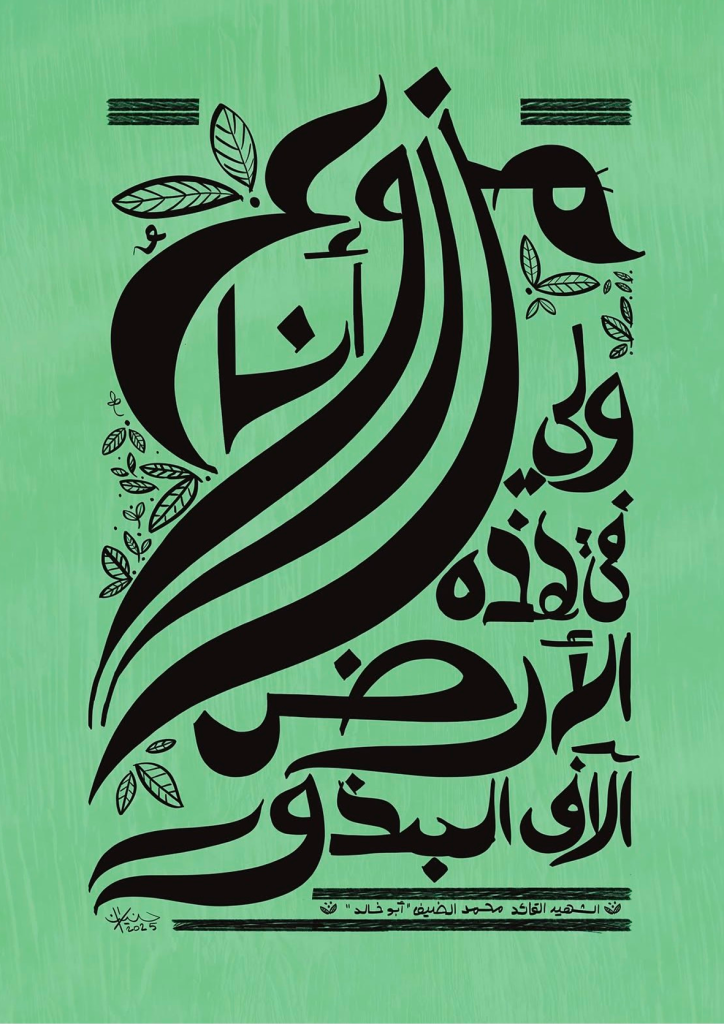
Welcome to the Special Issue
The Dodge calls attention to Palestine as an environmental issue—an occupation of air, water, and land; a forced removal and genocide of its Indigenous population; an irreversible damage to its natural landscape and resources; a violent erasure of its ancestral villages; a persistent violation, exploitation, and continued harm to its wellbeing and ecology at large.
Return to Roots: Writing Toward Land
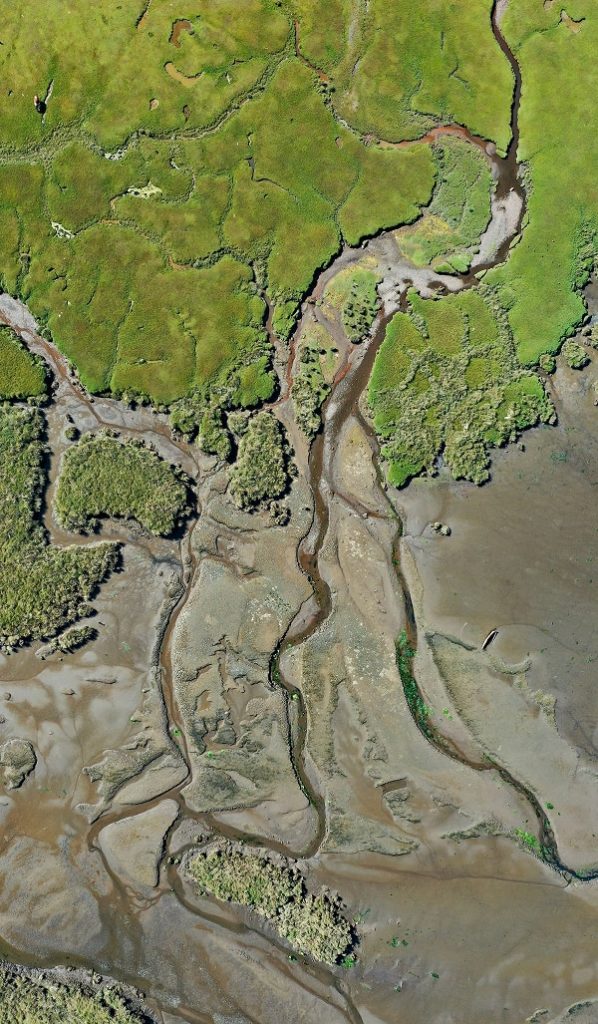
Return to Roots: Writing Toward Land
Itinerary for The Great Trail of War and Trade
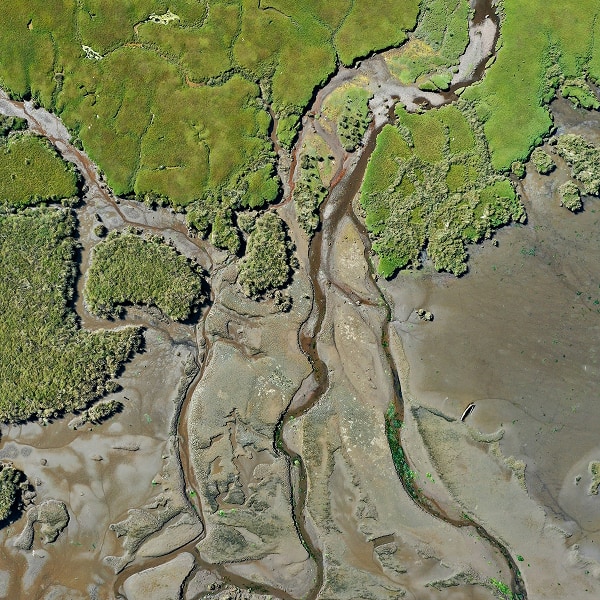
Itinerary for The Great Trail of War and Trade

Sara Abou Rashed
Sara Abou Rashed
Contents
Return to Roots:
Writing Toward Land
Introduction
The Glass Garden
Mila Kensington
The Glass Garden
Mila Kensington
The Glass Garden
Mila Kensington
The Glass Garden
Mila Kensington
Nonfiction
The Glass Garden
Mila Kensington
The Glass Garden
Mila Kensington
The Glass Garden
Mila Kensington
The Glass Garden
Mila Kensington
Poetry
The Glass Garden
Mila Kensington
The Glass Garden
Mila Kensington
The Glass Garden
Mila Kensington
The Glass Garden
Mila Kensington
Fiction
The Glass Garden
Mila Kensington
The Glass Garden
Mila Kensington
The Glass Garden
Mila Kensington
The Glass Garden
Mila Kensington
Translation
The Glass Garden
Mila Kensington
The Glass Garden
Mila Kensington
The Glass Garden
Mila Kensington
The Glass Garden
Mila Kensington
Visual Art
The Glass Garden
Mila Kensington
The Glass Garden
Mila Kensington
The Glass Garden
Mila Kensington
The Glass Garden
Mila Kensington
Contributors
The Glass Garden
Mila Kensington
The Glass Garden
Mila Kensington
The Glass Garden
Mila Kensington
The Glass Garden
Mila Kensington
The Glass Garden
Mila Kensington
The Glass Garden
Mila Kensington
The Glass Garden
Mila Kensington
The Glass Garden
Mila Kensington
The Glass Garden
Mila Kensington
The Glass Garden
Mila Kensington
The Glass Garden
Mila Kensington
The Glass Garden
Mila Kensington
The Glass Garden
Mila Kensington
The Glass Garden
Mila Kensington
The Glass Garden
Mila Kensington
The Glass Garden
Mila Kensington
The Glass Garden
Mila Kensington
The Glass Garden
Mila Kensington
The Glass Garden
Mila Kensington
The Glass Garden
Mila Kensington
The Glass Garden
Mila Kensington
The Glass Garden
Mila Kensington
The Glass Garden
Mila Kensington
The Glass Garden
Mila Kensington
All Content © The Dodge Magazine and respective authors and artists.
I am a heading
1.
Niisha [1]
Koochiwe? Koochiwekita? [2]
Skata[3]
Koochiwe [4]
Mata niwaakota tasi poonama [5]
Southward as indicated by the old instructions
of faith and commerce. My lungs draw from wisps
of warm air wafting over my infant’s
dark net of scalp as I warm my knuckles
around the rope. It is best to make an early start.
It is best to unmoor in a cove favored by the red necked
diving birds where peat warmed exhalations billow
in the northern chill. Each measure of travel returns
to essentials: one fire to the next, one sleeping place
or body of water. Water to water being the original
and eternal map. This Great Lake belongs to the Eeries,
but portage is the imperative of all walking creatures.
My arms tremble with the weight of the value
above my head until my grip calluses and my muscles steady.
[1] I am going
[2] Why? Why are you going? Note: repetition unusual in Shawnee, influence of English apparent
[3] Fragment of phrase to indicate want/desire/need/hunger
[4] See above
[5] I don’t know my place
Teaching Block
Directions and Purpose: Poetry is a beautiful expression of story, image, sound, and form. This exercise uses prompts to open the mind to symbolic* and associative* thinking. These are important perspectives in reading poetry. This resource is designed to offer an open-ended and unique way for readers to think about poetry and to encourage readers who might not feel sure about how to read a poem. There are no right or wrong answers to these prompts, and the reader can pick and choose at will, either responding to each prompt or selecting those that seem most interesting.
- Pick any poem you like and allow yourself to read the poem, listen to it, or visually explore the way it moves across the page. As you read, start to notice the way the poem enters your mind.
- Follow the prompts to think about color, image, shapes, and/or places that you find in the poem. These prompts will allow you to think about poetry in a new way.
*Symbolic: This kind of thinking and reading includes the ability to make connections beyond the immediate and explicit. For example, if a poem includes an image of a tree that stands symbolically for a way of thinking or a particular value, that would be symbolic thinking. In this exercise, the COLOR prompt asks the reader to think symbolically about the way color can symbolize emotion.
*Associative: This kind of thinking and reading includes the ability to connect ideas and allow the mind to branch out from one thing to another. For example, if a reader notices connections between the styles and forms of three different poems, that would be associative thinking. In this exercise, the SHAPES prompt asks the reader to think associatively about the way the words on the page connect to the story or form of the poem.
Prompts
COLOR: Are there any colors you notice in the poem? Make a note of them. What feeling or feelings do you take from the poem? Give it/them a color/s and define them.
IMAGE: What is an image that you notice from the poem? What visual stands out in your mind’s eye?
SHAPES: Think about the shapes you see in the poem. What do you notice about the way the writing looks on the page? Is there a story or perspective coming through from the poem? What do you think about the way the story is taking shape?
PLACES: Consider the places referenced in the poem. Where is this happening? What part of the poem is most interesting to you? Do you sense a particular place or time? What signs in the poem help show you where you are as a reader? What are the words or phrases in the poem that draw your attention or capture your curiosity?
[1] I am going
[2] Why? Why are you going? Note: repetition unusual in Shawnee, influence of English apparent
[3] Fragment of phrase to indicate want/desire/need/hunger
[4] See above
[5] I don’t know my place
I am a heading
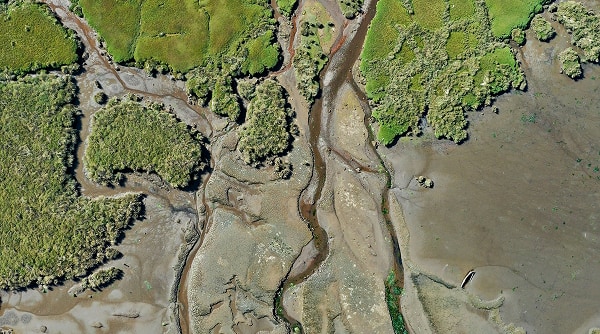
The ocean refluxes into the river. Is it, then, still a river? Or is it a brackish finger probing into the landscape? I squint, as if trying to mark the spot in the water where opposed currents intertwine like the snakes of the caduceus. The water surface, spangled with willow frond reflections, keeps its secret. But at my feet I spot something else: the velveteen dome of a mower’s mushroom pokes up from the grass. I bend down, noticing how the diminutive parasol structure disappears into the fine-grained soil.
I know that although this fellow looks lonely, he is really less of a fellow and more of a swarming festivity below ground. Mushrooms are reproductive flourishes of fungal life-forms that live in soil (or wood) as threadlike, filamentous webs called mycelium. Mycelium is composed of long tubes of hyphae. One network might have thousands of different hyphal tips all capable of forking, fusing, foraging, and creating increasingly complex connections with other fungal systems and vegetal life-forms. I lightly press my finger to the mushroom, imagining my mind slipping like a yolk from the egg of my brain, into my arm, then strained through my finger into the mushroom’s damp body. Deeper still, below the fruiting body, my consciousness dives on mycelial threads into the underworld. It holds tight to roving nuclei as it travels through a chain of opening and closing doorlike pores.
If I had entered into an animal cell, I might have found myself profoundly confined, abiding by the strict rules of inner and outer, organelles bolted to the floor. But here in this mycelial network, I am not confined to one node. I can wander through the whole web. My ride is possible only because fungi are biologically unusual, confounding standard ideas of the cell and the self.
If I had entered into an animal cell, I might have found myself profoundly confined, abiding by the strict rules of inner and outer, organelles bolted to the floor?
The ocean refluxes into the river. Is it, then, still a river? Or is it a brackish finger probing into the landscape? I squint, as if trying to mark the spot in the water where opposed currents intertwine like the snakes of the caduceus. The water surface, spangled with willow frond reflections, keeps its secret. But at my feet I spot something else: the velveteen dome of a mower’s mushroom pokes up from the grass. I bend down, noticing how the diminutive parasol structure disappears into the fine-grained soil.
All Issues
All Issues
Marlo Starr
Editor in Chief
Marlo Starr is an assistant professor of English at the College of Wooster. Her poems have appeared in The Shore, The Hopkins Review, The Threepenny Review, Ghost City Review, and elsewhere, and she is the recipient of a 2024 Individual Excellence Award in Poetry from the Ohio Arts Council. She affirms the Palestinian Campaign for the Academic and Cultural Boycott of Israel (PACBI).
Marlo Starr
Editor in Chief
Marlo Starr is an assistant professor of English at the College of Wooster. Her poems have appeared in The Shore, The Hopkins Review, The Threepenny Review, Ghost City Review, and elsewhere, and she is the recipient of a 2024 Individual Excellence Award in Poetry from the Ohio Arts Council. She affirms the Palestinian Campaign for the Academic and Cultural Boycott of Israel (PACBI).
Marlo Starr
Editor in Chief
Marlo Starr is an assistant professor of English at the College of Wooster. Her poems have appeared in The Shore, The Hopkins Review, The Threepenny Review, Ghost City Review, and elsewhere, and she is the recipient of a 2024 Individual Excellence Award in Poetry from the Ohio Arts Council. She affirms the Palestinian Campaign for the Academic and Cultural Boycott of Israel (PACBI).
Marlo Starr
Editor in Chief
Marlo Starr is an assistant professor of English at the College of Wooster. Her poems have appeared in The Shore, The Hopkins Review, The Threepenny Review, Ghost City Review, and elsewhere, and she is the recipient of a 2024 Individual Excellence Award in Poetry from the Ohio Arts Council. She affirms the Palestinian Campaign for the Academic and Cultural Boycott of Israel (PACBI).
Marlo Starr
Editor in Chief
Marlo Starr is an assistant professor of English at the College of Wooster. Her poems have appeared in The Shore, The Hopkins Review, The Threepenny Review, Ghost City Review, and elsewhere, and she is the recipient of a 2024 Individual Excellence Award in Poetry from the Ohio Arts Council. She affirms the Palestinian Campaign for the Academic and Cultural Boycott of Israel (PACBI).
Marlo Starr
Editor in Chief
Marlo Starr is an assistant professor of English at the College of Wooster. Her poems have appeared in The Shore, The Hopkins Review, The Threepenny Review, Ghost City Review, and elsewhere, and she is the recipient of a 2024 Individual Excellence Award in Poetry from the Ohio Arts Council. She affirms the Palestinian Campaign for the Academic and Cultural Boycott of Israel (PACBI).